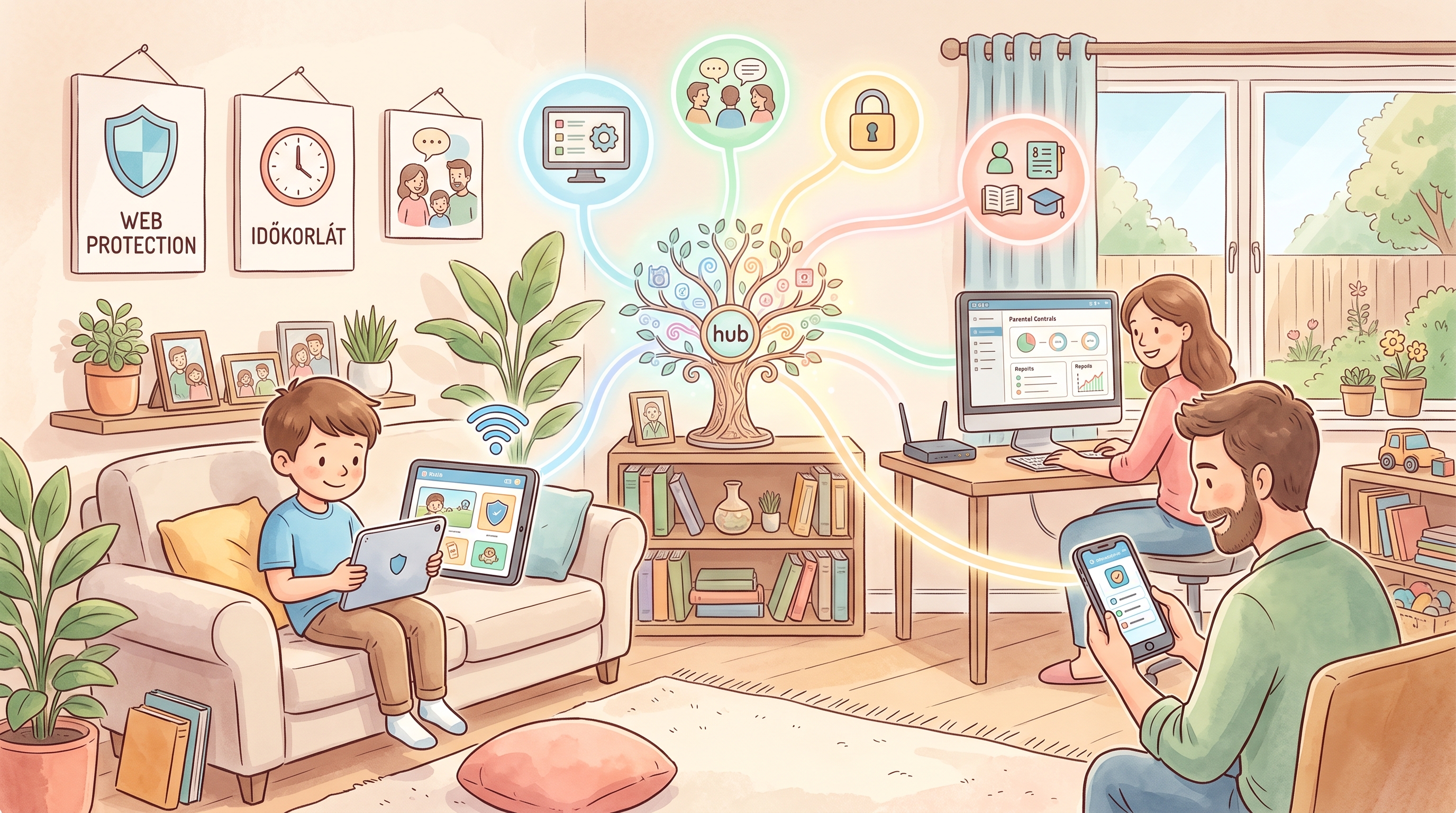
Most internet service providers in Hungary are already required, or will soon be required, to provide free internet service filtering pornographic content. While the online space can be made safer for children through this and other technical solutions, experts from the National Media and Infocommunications Authority (NMHH) warn that even the best software cannot replace dialogue between parent and child, as well as setting rules together.
A Parent's Guide to Early Childhood Digital Device Use
As digital devices play an increasing role in our daily lives, their use in children's lives is also appearing at an increasingly younger age. Nine out of ten preschoolers already use digital devices regularly, but 80 percent of three-year-olds also spend time in front of screens, and every tenth preschooler already owns their own device. In contrast, according to the recommendations of the professional charter issued by Bethesda Children's Hospital (opens in a new window), screen time is not recommended at all under the age of three, and even in preschool, the recommended screen time is a maximum of half an hour.
Setting up parental controls on Android devices
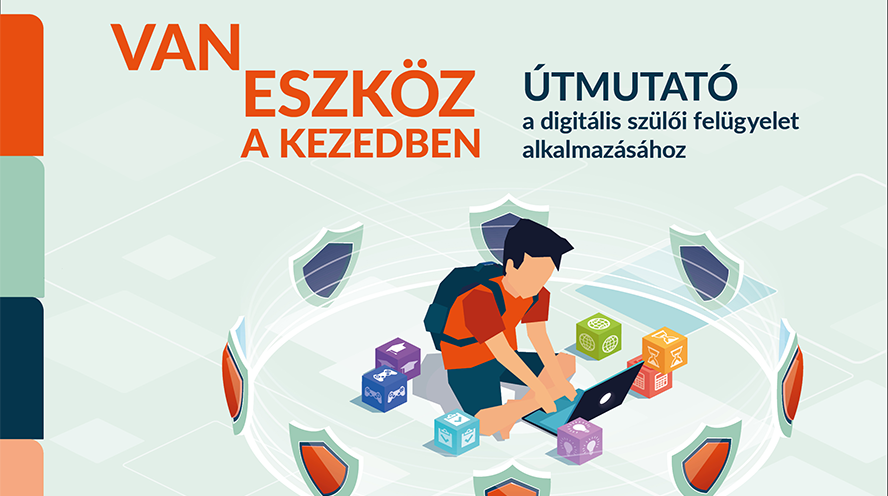
On Safer Internet Day, our educational publication titled "You have the tool in your hands" was released. It aims to provide guidance for conversations between parents and children, setting rules together, and properly using digital parental controls. Alongside the publication – which was created in cooperation between NMHH experts and the editorial staff of GameStar magazine – videos demonstrate step-by-step how to set up parental controls on Android and iOS devices.
The publication and the videos helping with the setup of parental control apps are available at the following link:
https://gyerekaneten.hu/tema/Van_eszkoz_a_kezedben
In close cooperation with the NMHH Children's Protection Internet Roundtable (of which the President is a member), we would like to inform you about the release of the NMHH's publication entitled Hurting Others is Not Cool (Mást bántani nem menő), which addresses the issue of online harassment/abuse (cyberbullying) threatening minors.
In March 2020, Gyerekaneten.hu was launched, an information site by the NMHH for parents, structured as a glossary.
The website aims to translate and briefly explain the digital world—where children seem to navigate with confidence—to the generation of parents through short entries. It highlights the dangers and risks, but also explores what children enjoy online and why, while providing advice for making conscious decisions in complex online situations.
 Magyar
 Deutsch
 Hrvatski
 Nederlands